Document Type : Original Research
Authors
1
Department of Primary, School of Teacher Education, University PGRI Semarang, Semarang, Indonesia
2
Department of Physical Education, School of Teacher Education, University PGRI Semarang, Semarang, Indonesia
3
Department of Physical Education, School of Teacher Education, University Tunas Pembangunan, Surakarta, Indonesia
4
Department of Sports and Exercise Science, Faculty of Interdisciplinary Studies, Khon Kaen University, Nong Khai Campus, Thailand
Abstract
Aims: The aim of this study was to analyze the effect of a combination of music therapy and breathing exercises on anxiety and physiological parameters in patients using mechanical ventilation.
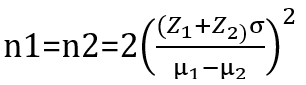
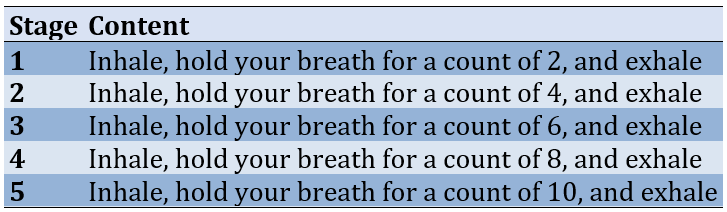
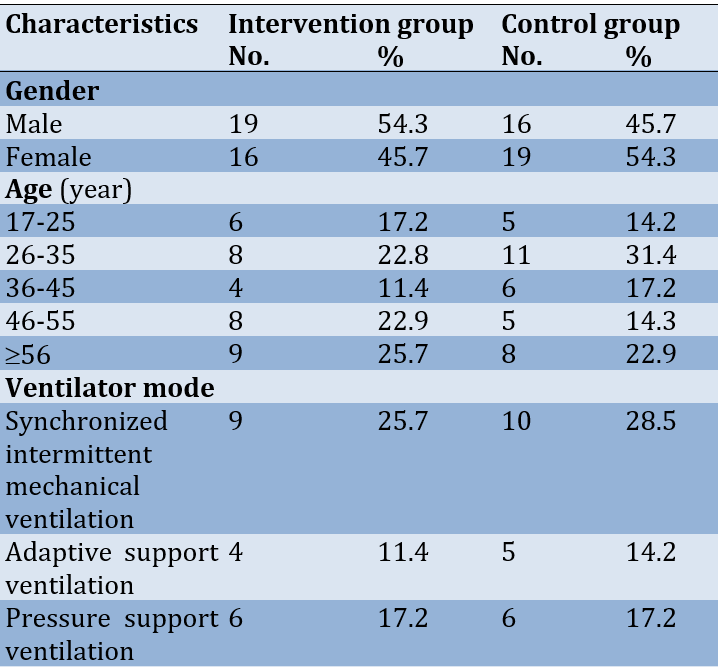
Materials & Methods: The sample of this randomized controlled trial included 70 patients assigned to a treatment group of 35 patients and a control group of 35 patients. The proposed intervention was a combination of music therapy and deep breathing exercises carried out for 30 minutes twice a day for five days at 09:00 AM and 4:00 PM. In patients receiving mechanical ventilation, the following settings were used: synchronized intermittent mechanical ventilation, adaptive support ventilation, pressure support ventilation, continuous positive airway pressure, and duo positive airway pressure. Measurement of anxiety levels was done by the State-Trait Concern Inventory (Form Y) and assessing physiological parameters, such as blood pressure, mean arterial pressure, heart rate, respiration rate, and oxygen saturation. Data analysis was done using the paired t-test, Wilcoxon test, Mann-Whitney U test, and MANOVA at p<0.05.
Findings: Differences were observed between the two groups in anxiety levels (p=0.001), heart rate (p=0.001), and respiration rate (p=0.001). There were no differences between the two groups in systolic blood pressure (p=0.549), diastolic blood pressure (p=0.891), mean arterial pressure (p=0.571), and oxygen saturation (p=0.827).
Conclusion: The combination of music therapy with deep breathing exercises affects patient anxiety and physiological parameters with minimal risks.
Keywords
Subjects